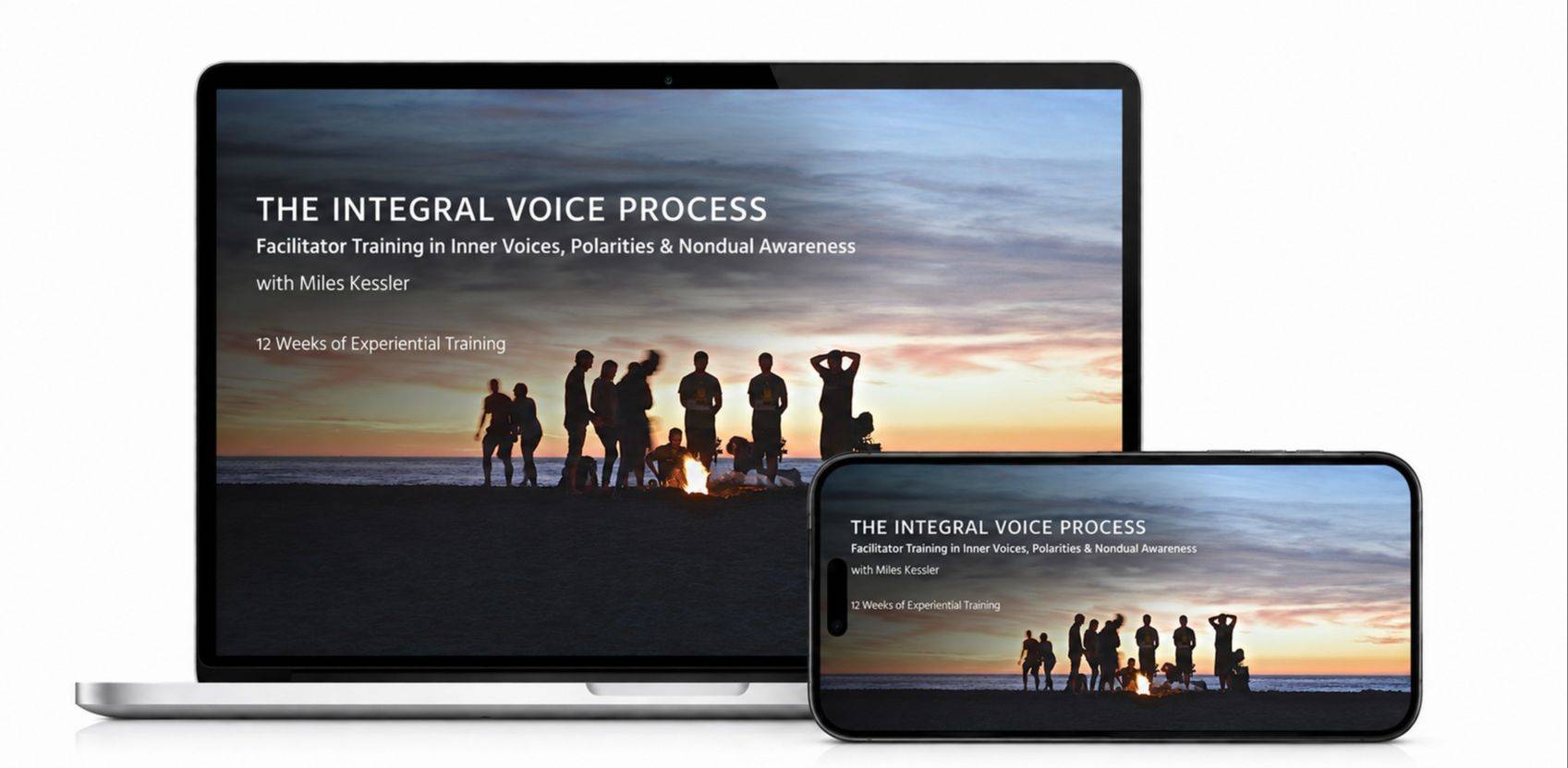
The Integral Voice Process
w/ Miles Kessler
A 12-Week Training in Voice Dialogue
& Nondual Facilitation
LIVE ONLINE · 12 WEEKS · 6–8 PARTICIPANTS · BEGINS NOV. 17th, 2026
Learn to guide individuals and groups through inner voices, opposing polarities, and nondual perspectives—with greater structure, presence, confidence, and skill.
APPLY FOR THE FOUNDING COHORTProgram At A Glance
This is not a lecture course about facilitation. You will experience the process from the inside, observe live demonstrations, practice facilitating others, and receive direct feedback within a committed small-group cohort.

Insight Alone Does Not Create Integration
Many experienced practitioners can recognize conflicting parts, psychological patterns, or moments of nondual awareness. But recognizing these perspectives is different from knowing how to work through and integrate them—or how to guide another person through them.
Without a skillful process:
- We remain identified with one side of an inner conflict.
- Disowned voices continue to influence us unconsciously.
- Resistance gets treated as an obstacle instead of intelligence.
- Nondual insight can bypass unresolved psychological material.
- Facilitators may understand the theory but lack a reliable structure.
- Powerful openings may occur without adequate embodiment or integration.
From Unconscious Identification to Conscious Relationship
Every person contains a multitude of aspects of self. Voices, energies, and perspectives. Some are familiar and dominant. Others have been pushed away, disowned, or left unheard. Still others open beyond the personal into dimensions of spacious awareness, compassion, wisdom, and nondual presence.
Through this process, participants learn to differentiate from habitual identification, skillfully inhabit different perspectives, and develop a more spacious relationship with the whole inner system.
The aim is not to eliminate any aspect of the self. It is to develop the capacity to hear, embody, and relate to each perspective without being unconsciously controlled by any one of them.

The Roots of the Process

Classic Voice Dialogue Process
Originated by Drs. Hal and Sidra Stone, Voice Dialogue is an experiential method for contacting and speaking from the distinct selves or energy patterns within the psyche. This process of giving voice to your various inner aspects helps you to recognize your primary selves, encounter disowned perspectives, and develop greater freedom through integration.

Contemplative and Nondual Dimensions
Building on Voice Dialogue, the Integral Voice Process merges Western psychology with Buddhist wisdom. Giving voice to primary and disowned aspects of the self opens access to nondual perspectives of compassion, wisdom, and non-separation.
Moving between personal, polarized, and nondual perspectives helps bridge between psychological integration and contemplative awakening—between momentary insight and its embodiment in everyday life.

Tying It All Together—The Integral Voice Process
Developed through more than 15 years of facilitation, Miles Kessler’s Integral Voice Process brings these methods into conversation with contemplative practice, embodiment, polarity work, and Integral perspectives.
The result is an approach that moves through personal, relational, and nondual dimensions—while remaining grounded in practical facilitation skills.
By The End Of The Training You Will Be Able To:
- Establish a trustworthy facilitation container.
- Help identify and speak from distinct inner voices.
- Recognize primary, protective, and disowned selves.
- Facilitate opposing perspectives without taking sides.
- Work with resistance respectfully and skillfully.
- Support differentiation without rejecting any voice.
- Guide from personal to nondual perspectives.
- Recognize the difference between nondual realization and psychological bypassing.
- Hold emotional intensity with greater spaciousness and compassion.
- Close and integrate a facilitation process responsibly.
- Recognize the limits of your competence and when not to continue a process.
- Apply the method appropriately within coaching, teaching, meditation, leadership, or group facilitation.

Twelve weeks will not make anyone a master facilitator. It will give you an embodied foundation, a reliable structure, supervised practice, and a clear path for continuing to develop your skills.

Facilitation Cannot Be Learned Through Theory Alone
The Learning Cycle:
- Experience the process
Discover how different interventions feel from the participant’s side. - Observe the process
Watch Miles demonstrate facilitation and explain the choices being made. - Practice the process
Facilitate progressively more complex exercises with members of your cohort. - Receive feedback
Refine your language, pacing, presence, discernment, and ability to respond. - Integrate the process
Apply what you learn within your own personal and professional context.
You will alternate between the roles of facilitator, participant, and observer. Each role develops a different dimension of facilitation mastery.
An Intimate Cohort of Only 6–8 Participants:
- Direct access to Miles throughout the training.
- Substantial opportunity to facilitate rather than only observe.
- Personal feedback tailored to your particular strengths and blind spots.
- A consistent cohort that develops trust over time.
- Exposure to different facilitation and participation styles.
- Space for individual questions and real-life applications.
- Accountability for completing the full learning journey.
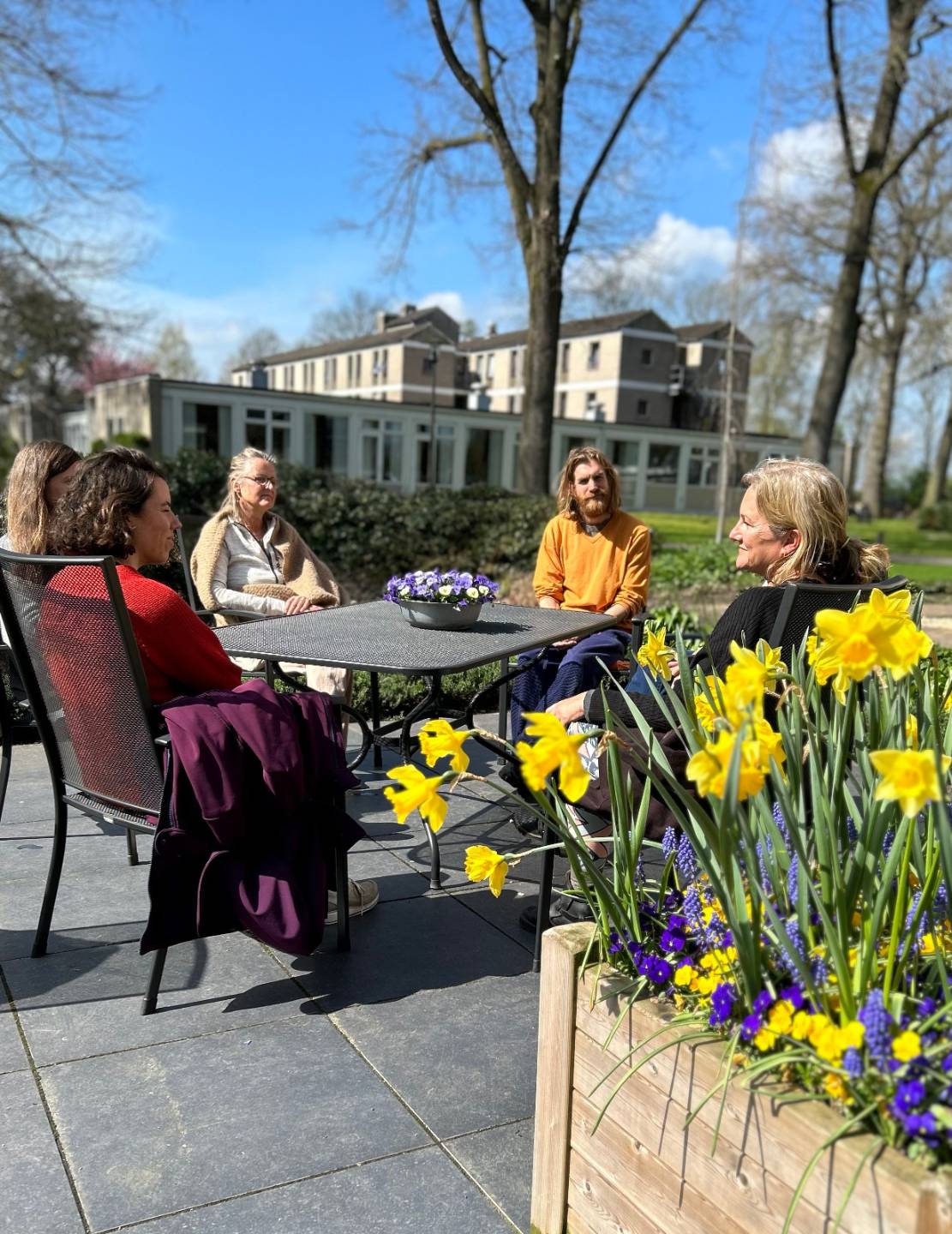
In a large online course, it is possible to remain invisible. In this program, your presence and participation are central to the training.
Who Is This Training For?
Is this training for you?
Reasons it may not be a fit
Participation Requirements
Participation requirements
Your commitment
The 12-Week Learning Journey
Phase One: Foundations and the Facilitation Container

Week 1 — Entering the Landscape
Experience the full arc of the process and establish a shared map of Voice Dialogue, Big Mind, and the Integral Voice Process. The cohort will create agreements around confidentiality, participation, consent, and feedback.

Week 2 — Structuring a Facilitation Session
Learn how to open a session, establish the presenting issue, invite a voice, support separation, transition between perspectives, and bring the process to a grounded close.

Week 3 — Primary and Disowned Selves
Learn to recognize the familiar voices that organize a person’s identity and the opposing perspectives that have been pushed out of awareness. Practice facilitating a foundational dialogue between distinct selves.
Phase milestone: Facilitate a short, structured Voice Dialogue process.
Phase Two: Polarity, Resistance, and Emotional Agility

Week 4 — Meeting Resistance and Protecting Choice
Learn to recognize resistance as meaningful intelligence within the system. Develop the ability to slow down, seek consent, work with protective voices, and distinguish participant resistance from facilitator anxiety.

Week 5 — Facilitating Polarities
Work directly with opposing perspectives such as strength and vulnerability, control and spontaneity, pleasing and assertion, autonomy and connection, or spiritual and human identity.

Week 6 — The Aware Ego and Emotional Agility
Develop the ability to stand in conscious relationship to opposing voices without collapsing into either side. Explore the difference between integration, compromise, transcendence, and greater freedom of choice.
Phase milestone: Facilitate a complete polarity process and receive structured feedback.
Phase Three: Big Mind, Big Heart, and Nondual Facilitation

Week 7 — Accessing Big Mind
Learn how to guide the transition from personal voices into universal and nondual awareness. Explore spaciousness, non-separation, and the distinction between accessing a state and embodying realization.

Week 8 — Accessing Big Heart
Explore compassion as a universal perspective that includes suffering without becoming overwhelmed by it. Distinguish Big Heart from rescuing, pleasing, sentimentality, and self-sacrifice.

Week 9 — Holding Space as Big Mind and Big Heart
Develop the facilitator’s capacity to hold the entire process with spacious awareness and compassionate attunement. Practice tracking psychological content, emotional energy, embodiment, and the relational field simultaneously.
Phase milestone: Facilitate a movement from personal voices into Big Mind or Big Heart.
Phase Four: Integration and Applied Facilitation

Week 10 — Integral Perspectives
Explore first-, second-, and third-person perspectives, as well as individual, relational, cultural, and systemic voices. Learn to recognize which perspective may serve the participant without imposing a developmental agenda.

Week 11 — Complete Facilitation Practicum
Guide a complete process incorporating contracting, voice identification, differentiation, polarity, nondual perspectives, and integration. Receive feedback from Miles and the cohort.

Week 12 — Integrating the Facilitator
Clarify your strengths, developmental edges, ethical responsibilities, and appropriate applications of the method. Create an individual plan for continued practice, mentoring, and development.
Phase milestone: Leave with an honest assessment of what you are ready to facilitate and what requires further development.
Everything Included in the Training
- 12 weekly live 90-minute training sessions w/ Miles
- A cohort limited to 6–8 participants
- Live demonstrations and facilitated experiences
- Progressive peer-practice exercises
- Direct facilitation feedback
- Monthly Q&A integration sessions
- Downloadable session recordings
- Facilitation maps, exercises, and worksheets
- Feedback and self-assessment rubric
Plus three special bonuses when you join this cohort
($300 added value)
Get these special bonus trainings
when you join our training!
Bonus 1: Private Coaching Session with Miles
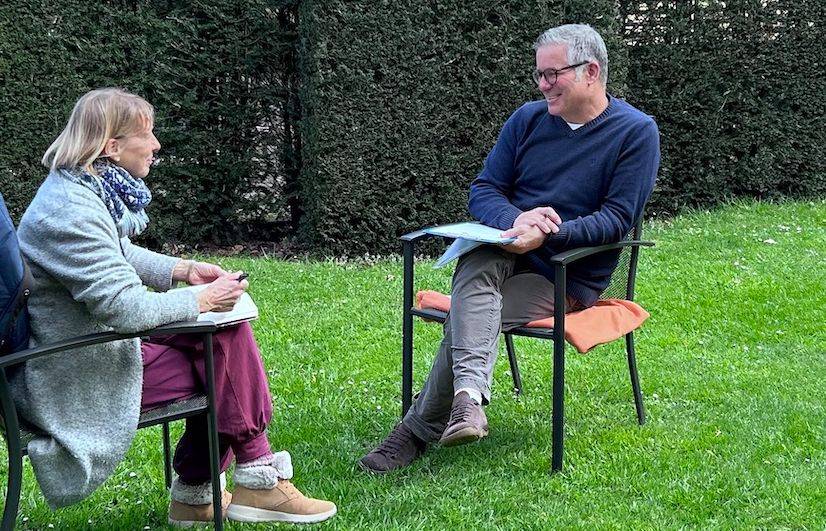
Meet privately with Miles for a 50-minute session focused on your individual development. Explore a personal issue through the Integral Voice Process, clarify your facilitation strengths and challenges, or receive guidance on integrating the method into your existing work. ($200 value)
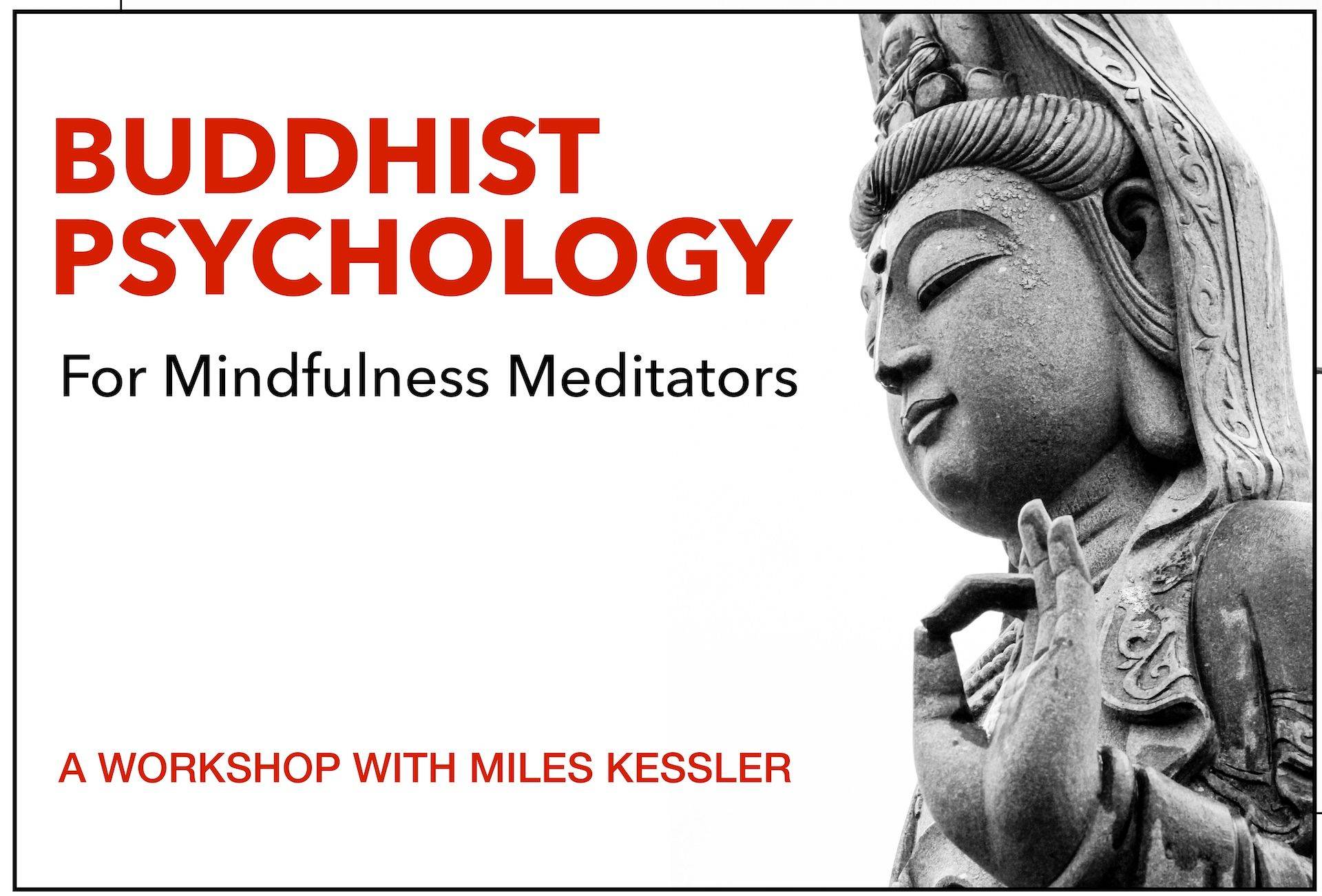
Bonus 2: Buddhist Psychology for Mindfulness Meditators
This three-hour experiential workshop introduces foundational Buddhist psychology as a practical map of mind and experience. Deepen your understanding of identification, resistance, reactivity, and freedom—and learn how these principles can support both meditation practice and skillful facilitation. ($50 value)
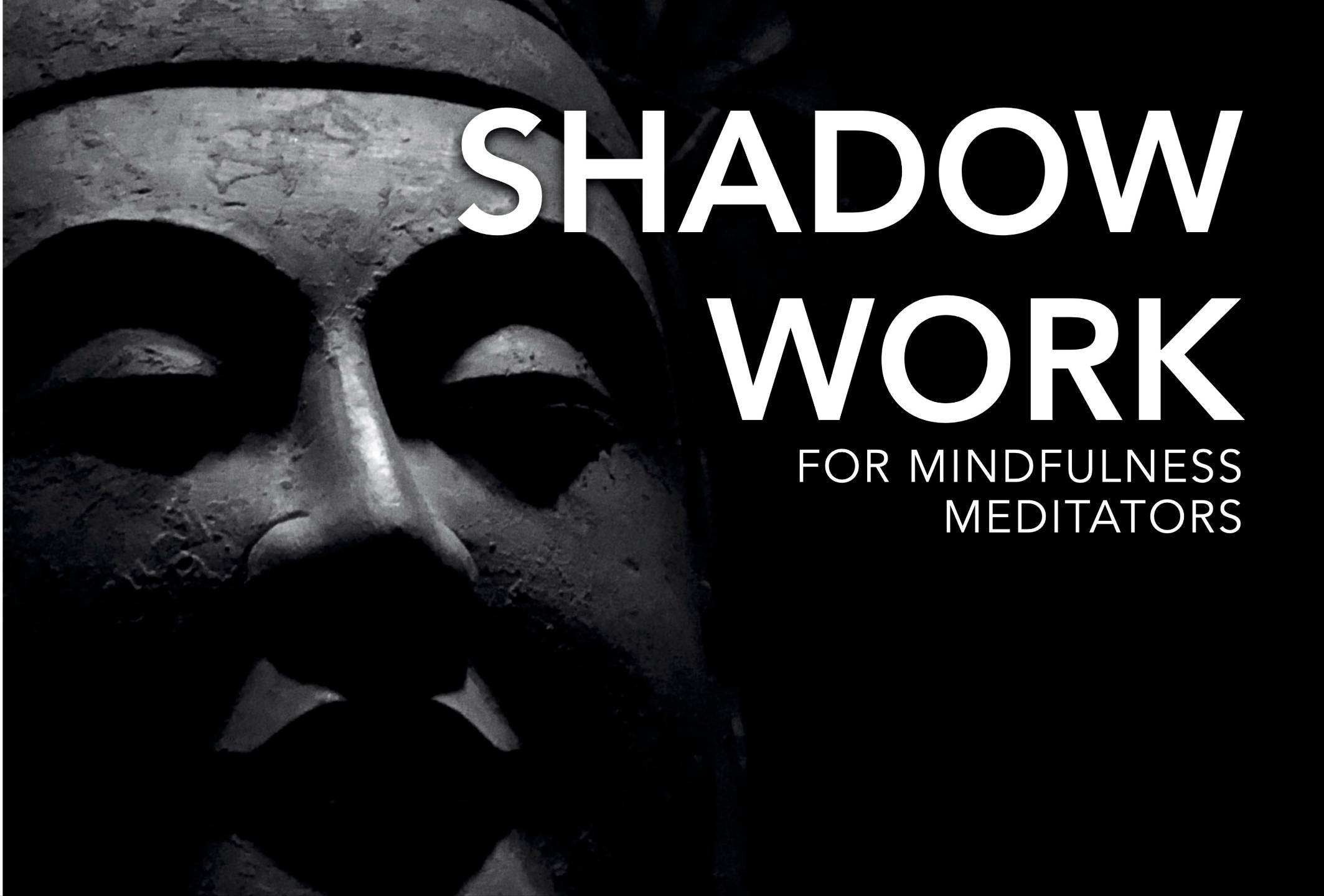
Bonus 3: Shadow Work For Mindfulness Meditators
This three-hour workshop explores the unconscious patterns and disowned qualities that meditation alone may not reveal. Learn how shadow forms, how it appears in practice and relationships, and how greater awareness can support psychological integration and authentic development. ($50 value)
$300 Value - FREE When You Join the Integral Voice Process Facilitation Training
Why Train With Miles?
Miles Kessler is an internationally recognized meditation teacher, Aikido sensei, facilitator, and founder of The Integral Dojo in Tel Aviv. For more than 25 years, he has taught practices of awareness, embodiment, conflict transformation, and human development—including leading cross-cultural conflict-resolution processes in Israel and Palestine.
Miles trained directly in the Big Mind Process™ with Genpo Roshi and Diane Musho Hamilton Roshi and has facilitated Big Mind and related voice-based processes with individuals and groups for more than 15 years.
Drawing upon more than 25,000 hours of meditation practice, his approach integrates Vipassanā, Buddhist psychology, mindfulness, Aikido, Integral Theory, shadow work, somatic awareness, and conflict resolution. The Integral Voice Process brings these streams together as an experiential path of psychological integration, skilled facilitation, and nondual awareness.
Students On Working With Miles
"Miles offers a clearly structured, rich, and deep learning experience. In all my years of studying, I never had such an excellent combination of learning and practice. Besides that, Miles knows how to build a great learning community, which makes the study a wholehearted, living, and enjoyable path. If you feel inspired to bring mindfulness meditation to more people in the world, this course definitely is a great chance to learn AND practice how to do it. I highly recommend it."
Annette Rolig, Germany -Bowen Therapist, Aikido & Meditation Teacher
"Miles is an exceptional instructor and gifted facilitator for all mental health professionals looking to enhance their clinical practice with Buddhist psychology and applied mindfulness.
Additionally, I am lucky to have found a teacher like Miles who models how to walk the talk with an emphasis on shadow work and ethics. Not only am I a more skillful psychotherapist, but my own sitting practice has blossomed under his guidance! Hands down — a ten out of ten rating!"
Michael James Miller - LCSW-BACS
"Training with Miles in his Meditation Apprenticeship Program has been an extremely enriching experience for me. His vast knowledge shows in the clarity of explanation and guidance he provides while being able to adapt the message to each person. Furthermore, his commitment to my success has enabled me to accelerate my growth in my mindfulness practice to the point that even after a couple of months into the program, I could see the benefits overflowing into my daily life.
Mariana Malcon, Head of Data Science for Guided Selling at HP
From participants in Miles’s facilitation, coaching, and related programs
Program Logistics
Everything you need to know before joining the founding cohort.
- Program Dates
- Nov. 17th, 2026 – Feb. 9th, 2027
- Live Meeting Day
- Tuesday
- Meeting Time
- 18:00 - Berlin / 12:00 pm New York / 9:00am Los Angeles
- Session Length
- 90 minutes
- Location
- Live online via Zoom
- Cohort Size
- Limited to 6–8 participants
- Session Recordings
- Recordings available for all sessions of the program
- Weekly Commitment
- Up to 2½ hours, including the live session and optional peer practice
- Application Deadline
- Nov. 1st, 2027 [As this is a small group, early application recommended]
- Founding-Cohort Tuition
- $895 paid in full or three monthly payments of $325
*Because this is a highly experiential small-group training, consistent attendance and active participation are expected.
**If there is enough interest, another cohort for the evening hours in N. America could be opened. Mention in the application process if interested.
Join the Founding Cohort!
FOUNDING COHORT TUITION
$895
Future regular tuition: $1,195
PAYMENT PLAN
$325/m
3 monthly payments
The Integral Voice Process is an intimate, experiential training limited to 6–8 participants. To support the quality and safety of the group, enrollment begins with a brief suitability application. This ensures that the program is a good fit for your experience, intentions, and readiness to participate fully.
Frequently Asked Questions
Is this an official Big Mind or Voice Dialogue certification?
Do I need to be a therapist or professional coach?
How much facilitation practice will I receive?
Will the sessions be recorded?
Is this appropriate for working with trauma?
What is the refund or cancellation policy?
How does the application process work?
Are You Ready to Enter the Process?
Facilitation is not simply a collection of techniques. It is the capacity to remain present, curious, and spacious while another person encounters the different voices shaping their experience.
Over these 12 weeks, you will learn the structure of the process—but you will also work directly with the instrument through which all facilitation happens: yourself.
If you feel called to deepen your own integration while learning to guide others with greater clarity, compassion, and skill, I invite you to apply for the founding cohort.
—Miles