Stage 1
Establishing the Ground
Purification of Virtue (Sīla-visuddhi)
Ethical stability, alignment, and the conditions that support deep practice.
You begin to notice subtler patterns. The mind becomes clearer in some places, yet strangely entangled in others.
Old forms of grasping reveal themselves. Questions arise about the direction your practice is actually moving. At this point, a map can help.
The 7 Stages Of Purification is a six-month guided exploration of one of the classical maps of Vipassana meditation: the Seven Purifications.
Together, we will study these stages not simply as Buddhist theory, but as a framework for investigating your own experience and deepening your practice
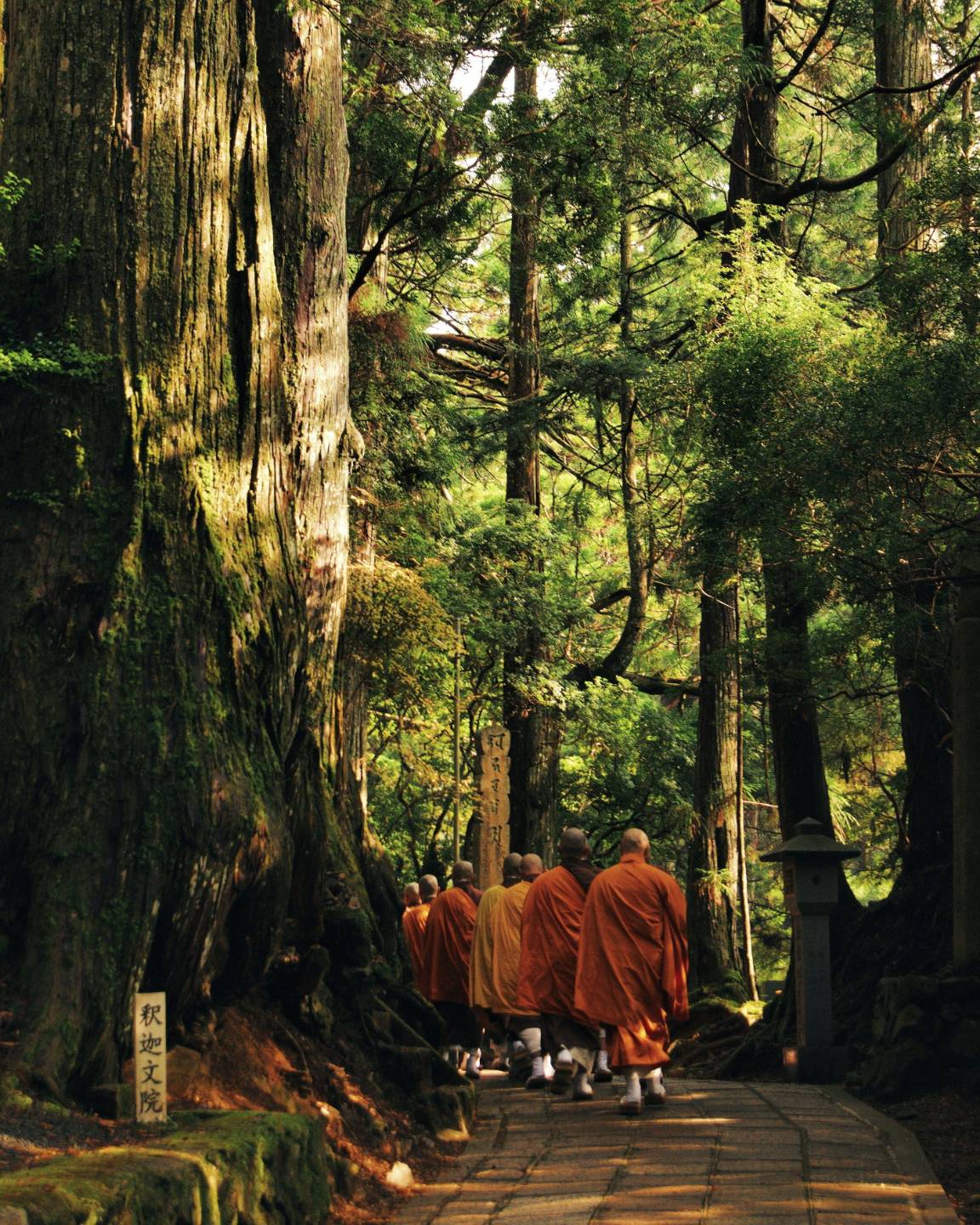
Most of us begin meditation with relatively straightforward intentions. We want to become more present. Less reactive. More concentrated.
Perhaps we want greater peace, clarity, or freedom from unnecessary suffering. And practice can certainly give us these things.
But if we stay with meditation long enough, something deeper begins to happen. We start seeing the mechanisms of the mind itself.
We see how experience becomes entangled with desire. How resistance appears. How thoughts become identities. How identities are grasped.
How something as simple as a sensation, thought, or fear can become me and mine almost instantly.
This is where Vipassana becomes more than a technique for calming the mind. It becomes an investigation into the very processes through which we create suffering.
And that investigation is the beginning of purification.
The word purification can easily be misunderstood.
It can sound as though something is fundamentally wrong with us and needs to be removed. That is not how I want us to approach this work.
Think instead of a sculptor facing a block of wood. The form is already there. The work is to gradually remove what obscures it.
Meditation works in a similar way.
Through mindfulness, concentration, ethical practice, investigation, and direct seeing, we begin to recognize the habits of grasping and clinging that obscure the natural clarity of mind.
We don't have to fight those patterns. We have to see them. Again and again. Clearly enough, directly enough, that the mind begins to understand for itself what creates suffering and what releases it.
This is one way of understanding the path of purification.
Not as an attempt to construct some ideal spiritual identity. But as a gradual clearing away of confusion. A deepening capacity to meet experience as it actually is.
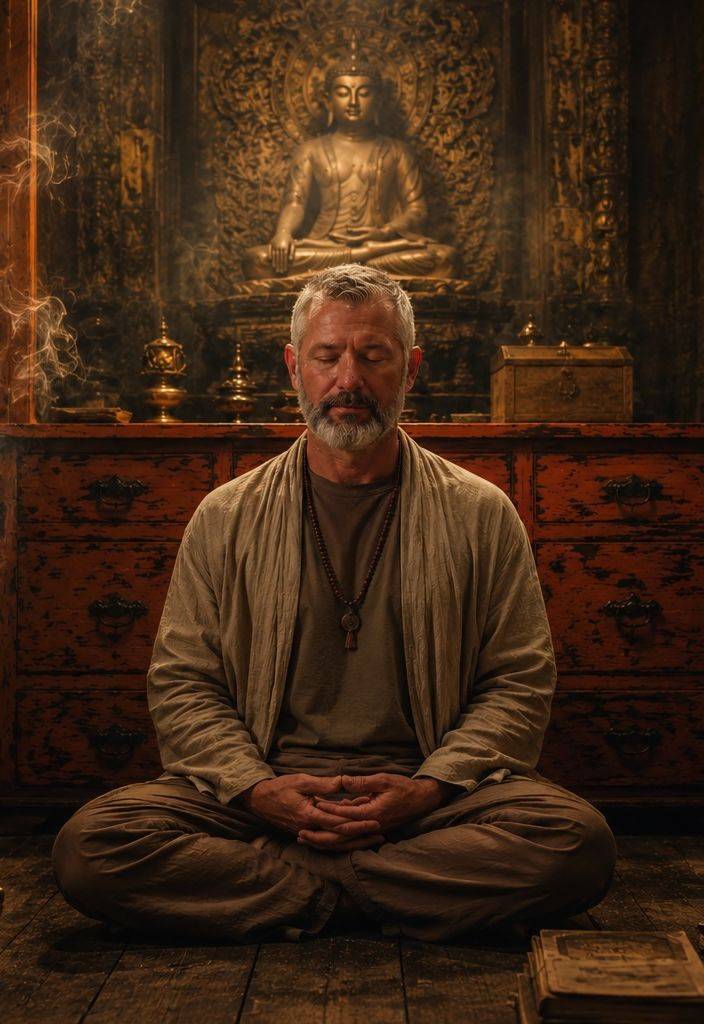
The Seven Purifications present meditation as a progressive process.
They begin with the foundations of how we live and how we stabilize the mind, and move progressively into increasingly refined levels of insight and direct understanding.
Over six months, we will move through this map step by step. Not to collect another set of Buddhist concepts. Rather to use the map to illuminate your practice.
Where are you clear? Where are you confused? Where does doubt enter? What happens when insight becomes stronger?
How do we distinguish genuine understanding from the experiences, interpretations, and attachments that can arise around meditation?
And what does increasingly direct knowledge of experience actually mean?
The map gives us a way to investigate these questions together.
THE MAP
The Seven Purifications describe a progressive movement from the foundations of conduct and concentration into increasingly refined levels of insight and direct understanding.
Stage 1
Purification of Virtue (Sīla-visuddhi)
Ethical stability, alignment, and the conditions that support deep practice.
Stage 2
Purification of Mind (Citta-visuddhi)
Attention gathers, concentration stabilizes, and the mind becomes more collected.
Stage 3
Purification of View (Diṭṭhi-visuddhi)
Mind and body are seen more directly, with less fusion, story, and confusion.
Stage 4
Purification by Overcoming Doubt (Kaṅkhā-vitaraṇa)
Conditionality becomes clearer, and doubt gives way to direct understanding.
Stage 5
Knowledge & Vision of What Is and Is Not the Path (Maggāmagga)
Insight is distinguished from side effects, fascination, and subtle detours.
Stage 6
Knowledge & Vision of the Way (Paṭipadā)
Insight deepens through increasingly direct seeing, moving toward equanimity.
Stage 7
Knowledge & Vision (Ñāṇa-dassana)
The path culminates in direct knowledge and liberating insight.
Each month builds on the preceding stage, allowing enough time for teaching, meditation, investigation, questions, and integration.

Purification of Conduct & Purification of Mind
We begin with the foundation. Before insight can deepen, there must be a sufficient degree of stability in how we live and how we practice.
We will explore the relationship between ethical alignment, mindfulness, concentration, and the collectedness of mind necessary for genuine investigation.
This first month establishes the ground for everything that follows.

Purification of View
What exactly are we experiencing when we say “I,” “me,” “my body,” or “my mind”? This stage begins a more penetrating investigation into experience itself.
We will explore the distinction between direct experience and the identities, interpretations, and assumptions we habitually place upon it. The question becomes increasingly simple:
What is actually happening here?

Purification By Overcoming Doubt
As practice becomes more refined, important questions emerge. What causes experience? What conditions it? What belongs to the path and what is simply another construction of the mind?
Rather than suppressing doubt, we learn to investigate deeply enough that certain kinds of uncertainty begin to resolve through direct experience of cause and effect.
The practice becomes increasingly grounded in direct seeing rather than belief.

Purification of What Is Path and Not-Path
Not every powerful meditation experience represents progress. Clarity, energy, unusual states, joy, tranquility, insight, and other experiences can all become objects of attachment.
This stage develops discernment. We begin learning to recognize what genuinely supports insight and what can subtly become another place for the mind to grasp.
The map becomes especially useful here.

Purification by Knowledge and Vision of the Way
At this stage the path becomes increasingly experiential. Insight is no longer primarily something we understand conceptually.
The changing, unstable, and selfless nature of experience becomes progressively clearer through direct observation. Practice begins to develop its own momentum.
Our work during this month will be to understand this territory without forcing it, dramatizing it, or turning the map itself into another attachment.
Purification by Knowledge and Vision
The final purification points toward the maturation of insight. Here we will explore what the tradition means by direct knowledge and vision, how this relates to the culmination of the Vipassana path, and how the entire sequence of purification fits together.
Rather than treating this as an abstract spiritual achievement, we will remain grounded in practice:
What can be directly known? What releases grasping? And what does the path ultimately ask us to let go of?
Six months of sustained practice and exploration.
Teaching | Meditation | Sangha | Questions | Integration
There is an important caution whenever we work with meditation maps.
Maps can orient us. They can help us recognize territory. They can normalize difficult periods of practice and provide language for experiences that might otherwise be confusing.
But they can also become something else to grasp. A meditator can begin asking: What stage am I in? Should I be further along? Did that experience mean something? Am I doing this correctly?
The purpose of this course is not to turn meditation into a spiritual scoreboard. The map exists to serve the practice. The practice does not exist to satisfy the map.
Our emphasis throughout these six months will therefore remain on direct experience, careful investigation, patient practice, and intelligent discernment.
Come and see for yourself.
This course is especially suited to meditators who:
You do not need to believe that you are already at an advanced stage of meditation.
You do need a genuine interest in practice and a willingness to investigate your own experience carefully.

Miles Kessler is an internationally recognized meditation teacher with more than 25 years of teaching experience and more than 25,000 hours of meditation practice.
His primary Vipassana training is in the Burmese Mahasi tradition, where he studied deeply with teachers including Sayadaw U Pandita and Vivekananda.
Miles is especially interested in the places where meditation moves beyond technique and becomes a direct investigation into the nature of experience itself. His teaching brings traditional Buddhist maps into clear, contemporary language.
In The 7 Stages Of Purification, Miles draws on decades of practice and teaching to guide students through this classical Vipassana map as a living framework for understanding their own meditation: how concentration develops, how insight matures, where confusion and attachment can arise, and how direct seeing gradually becomes more refined.
His approach is grounded, experiential, and practical. The aim is not to collect spiritual concepts or to identify with a particular stage, but to use the map for what it is meant to do: support clearer seeing, wiser practice, and deeper freedom.

HOW THE SIX MONTHS WORK
The course unfolds inside the Integral Dojo Kajabi Community, giving us one dedicated space for teaching, practice, conversation, and continuity throughout the six months.
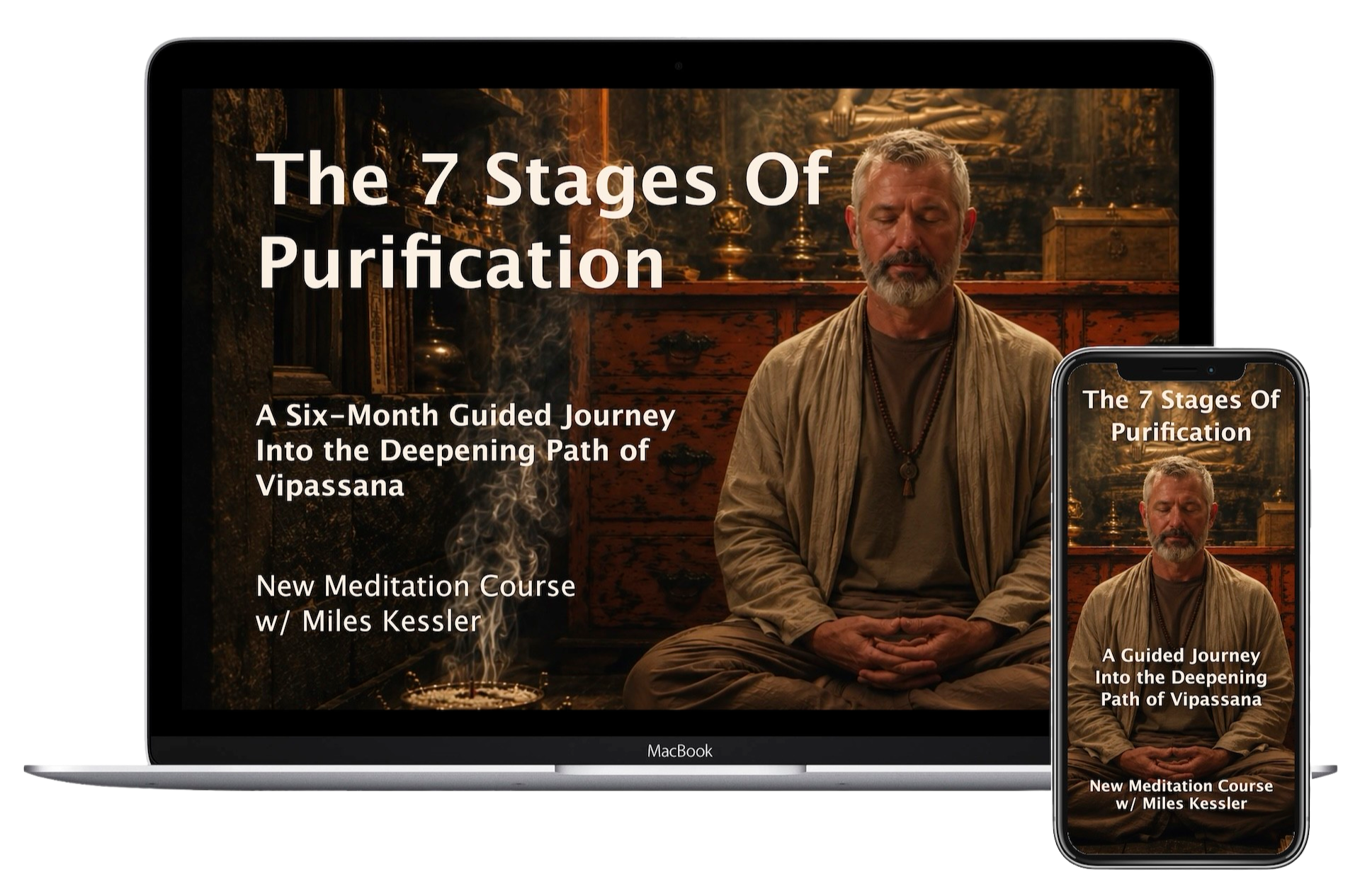
A progressive curriculum covering all Seven Purifications.
Live teaching, meditation, and guided exploration on the first and third Sundays.
Dedicated practice and community connection on the second Sunday.
A live opportunity to bring questions and practice experiences into dialogue.
Our online home for all our meetings, recordings, and complete resources for the six-month journey.
We practice deliberately. We cultivate mindfulness. We develop concentration. We investigate experience. And yet the deepest insights cannot simply be manufactured through effort.
The Seven Purifications give us a map for understanding this unfolding process.
Over six months, we will study that map, practice with it, question it, and use it to look more carefully into our own experience.
Not so you can become obsessed with where you are on the path. But so the map can help you become more intimate with the territory.
If this is where your practice is calling you, I invite you to join us.
See you in the deep end.
A Six-Month Guided Vipassana Journey
Begins Oct. 11th 2026. Register below.
Six months of sustained practice and exploration.
Teaching | Meditation | Sangha | Questions | Integration